
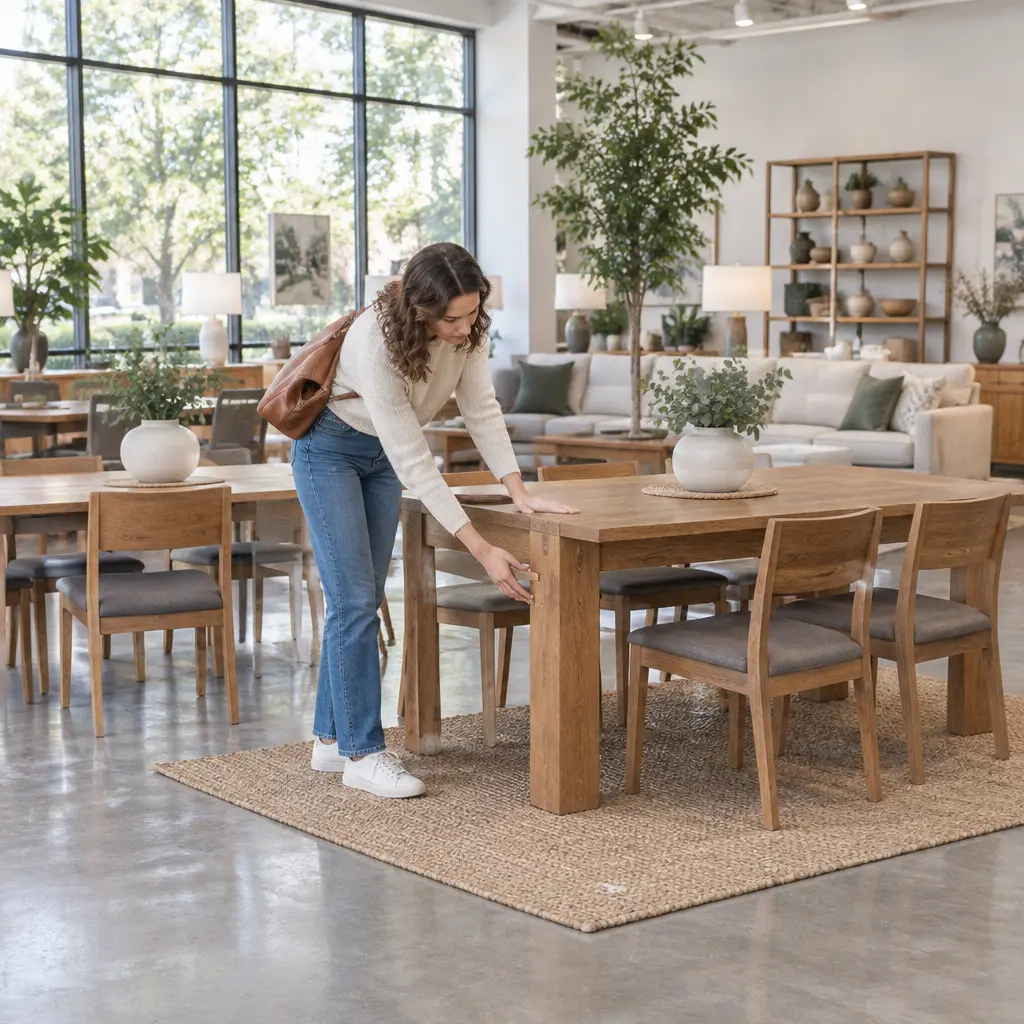
Furniture that lasts is furniture built to withstand everyday use, remain repairable, and suit the space where it will live. Choosing it means looking beyond appearance to frame and joint construction, materials, upholstery, comfort, care requirements, and warranty terms. These checks matter because furniture is a long-term household purchase: the U.S. Bureau of Labor Statistics’ Consumer Expenditure Survey tracks furniture and bedding as a distinct spending category, while the U.S. Environmental Protection Agency identifies furniture as one contributor to bulky waste. A careful choice can therefore support comfort, value, and a longer useful life.
Assess construction quality for furniture that lasts
Construction quality is the strength and stability of a furniture piece’s frame, joints, supports, and load-bearing components. The American Home Furnishings Alliance’s “Furniture Quality” guidance emphasizes evaluating how a product is made—not just its style or price—because the materials and construction determine how it performs over time. Furniture quality has no single universal score, so buyers should compare observable features and relevant product information.
Frames and load-bearing parts
A frame is the structural skeleton that supports a chair, sofa, table, or bed. On upholstered furniture, inspect accessible areas for a frame that feels firm and does not twist or creak under ordinary pressure. Solid wood and well-made engineered wood can both be suitable; the grade, thickness, design, and joinery matter more than a “solid wood” label alone. For tables and storage pieces, check that legs, shelves, drawer supports, and back panels are securely attached and appropriate for the expected load.
Joinery, fasteners, and stability
Joinery describes the methods used to connect furniture components. Properly fitted mortise-and-tenon, dovetail, or dowel joints can provide durable connections when well made; screws and metal brackets can also work when correctly sized and installed. Look for tight, even joints, aligned drawers, level feet, and no wobble on a flat surface. The U.S. Consumer Product Safety Commission’s guidance on clothing-storage units also illustrates why structural stability matters beyond longevity: tall dressers and similar units should be anchored to reduce tip-over hazards, especially in homes with children.
Standards and product testing
Standards provide a more consistent way to evaluate certain performance and safety characteristics. The American National Standards Institute and the Business and Institutional Furniture Manufacturers Association publish furniture standards, including requirements and test methods for some office seating and systems. A standard or certification is useful only when it applies to the product and intended use; ask the seller what was tested, by whom, and against which standard. For household furniture, also check assembly instructions, weight limits, anti-tip provisions, and any safety notices.
Once the structure is sound, the next decision is which materials will suit the room, climate, household, and maintenance routine.
Choose durable furniture materials for the way you live
Material durability is a material’s ability to retain function and appearance under expected wear, cleaning, sunlight, moisture, and impact. There is no universally best material: a finish that works in a rarely used guest room may be unsuitable for a busy family kitchen. Match the material to the furniture’s location and use, then confirm the maker’s care instructions.
Wood, veneer, and engineered panels
Solid wood can often be sanded or refinished, but it may expand or contract with changes in humidity and can dent or scratch. Veneer is a thin layer of wood applied over a stable core; well-made veneer can deliver a real-wood surface while using less solid timber, but deep damage may be difficult to repair. Engineered panels vary widely in density, edge protection, and resistance to moisture. Inspect corners and edges, ask what the core material is, and avoid placing products in damp locations unless the manufacturer specifically approves it.
Upholstery and textiles
Upholstery durability depends on the fabric or leather, construction, seams, cushion design, and cleaning method. Ask for the fabric’s care code and any abrasion or performance-test results, while remembering that test scores are not guarantees of years of service in a particular home. Tightly woven fabrics may be practical for frequent use, and removable, replaceable covers can simplify cleaning or renewal. Leather types also differ: surface coatings, tanning, thickness, and finish affect how they age and what cleaners are safe. For pets, children, or high-traffic rooms, request a material sample and test how it responds to routine cleaning before buying.
Metal, glass, and finishes
Metal frames can offer strength, but weld quality, corrosion protection, and connection points determine how well a piece holds up. Glass tabletops should be specified for furniture use, installed securely, and checked for chips or cracks; follow the maker’s instructions about heat and impact. Finishes protect surfaces from stains, moisture, and abrasion, but no finish is damage-proof. The American Cleaning Institute recommends following product-specific care guidance because an unsuitable cleaner can harm coatings, fabric, or wood.
Durable materials are only valuable if the furniture fits its purpose. Comfort, proportions, and everyday usability should therefore be evaluated alongside construction.
Match furniture design to use, comfort, and space
Furniture suitability is how well a piece’s dimensions, ergonomics, and features meet the needs of its users and setting. A technically robust chair can still be a poor purchase if it is uncomfortable, difficult to enter through a doorway, or too large for the room. Measure first and test the actual product where possible.
Measure the room and delivery route
Measure the intended floor area, ceiling height, doorways, stair turns, elevators, and hallways before ordering. Record the product’s assembled dimensions and, for modular or knock-down furniture, the package dimensions as well. Leave room for drawers and doors to open and for people to move around the piece. A simple floor plan or taped outline can reveal scale problems before delivery.
Test comfort and ergonomics
Ergonomics concerns the relationship between a product and the people using it. Sit in chairs and sofas for several minutes, checking seat height, depth, back support, arm position, and ease of standing. For desks and office chairs, consider adjustability and whether the furniture supports a comfortable working posture. The U.S. Occupational Safety and Health Administration’s computer-workstation guidance recommends arranging workstations to support neutral, comfortable positions; furniture adjustments can help, but they do not replace a suitable overall setup.
Plan for changing needs
Adaptable furniture can extend useful life when household needs change. Examples include dining tables with leaves, modular shelving, replaceable cushions, and beds with standard-size components. Consider whether a product can be disassembled for moving and whether parts such as handles, feet, hinges, or covers are available separately. A simple, repairable design may remain useful longer than a highly specialized piece with proprietary components.
After confirming fit and function, compare the total cost of ownership—not just the price on the tag.
Compare long-term value, warranties, and repairability
Long-term value is the balance of purchase price, expected service life, care, repair costs, and usefulness. A lower-priced product can be economical if it meets the need and is easy to maintain; a higher-priced product is not automatically better. The Federal Trade Commission advises consumers to understand warranty coverage and limitations before relying on a warranty as evidence of product quality.
Read warranty terms carefully
A warranty is a seller’s or manufacturer’s stated commitment to repair, replace, or otherwise address covered defects under specified conditions. Check the term for each component: frames, springs, cushions, mechanisms, finishes, and fabrics may have different coverage. Note exclusions for normal wear, commercial use, stains, misuse, or required maintenance, as well as who pays for transport and labor. Keep the receipt, product label, assembly instructions, and warranty document.
Check repair options and replacement parts
Repairability is the ease with which a product can be maintained or restored rather than discarded. Before buying, ask whether the manufacturer sells replacement cushions, covers, legs, hinges, drawer runners, or hardware and whether repairs can be completed locally. Standard fasteners and accessible construction usually make routine fixes easier. For secondhand furniture, inspect joints and moving parts, confirm that any safety-related components are present, and check upholstered items carefully for odors, pests, and damage.
Estimate cost per year of use
A basic comparison is purchase price divided by the number of years the furniture is expected to remain useful, with care and repair costs considered separately. For example, a $900 table used for 15 years costs $60 per year before maintenance; a $450 table used for five years costs $90 per year. These figures are illustrative, not a prediction of actual product life. The comparison is most helpful when the options have similar function, dimensions, and quality evidence.
These purchasing decisions also affect what happens when furniture is no longer wanted, making maintenance and end-of-life planning part of a lasting choice.
Extend furniture life through care and responsible reuse
Furniture life extension means keeping products functional through appropriate use, cleaning, repair, resale, donation, or material recovery. The U.S. Environmental Protection Agency reports that the United States generated 12.1 million tons of furniture and furnishings in 2018, with 80.1% landfilled, 19.5% combusted for energy recovery, and 0.4% recycled. These figures show why maintaining and reusing serviceable furniture can matter, while also underscoring the limited role recycling played in that reported waste stream.
Use care instructions and prevent avoidable damage
Routine care includes cleaning with approved products, tightening loose fasteners when appropriate, protecting surfaces from heat and moisture, and keeping furniture away from excessive sunlight or damp conditions. Use coasters and protective pads where suitable, and follow guidance for moving or lifting heavy pieces. Avoid improvised cleaners: test any approved cleaner in an inconspicuous area and follow the manufacturer’s instructions.
Repair, resell, or donate before disposal
When a piece no longer suits its owner, resale or donation can keep it in use if it is safe and in acceptable condition. Repairing a loose joint, replacing a worn cover, or refinishing a surface may restore function at less cost than replacement. Local donation organizations and reuse programs have different acceptance rules, so check condition requirements and pickup options before arranging transport. If the item cannot be reused, consult local waste authorities about bulky-item collection and material-specific recycling.
A practical buying checklist
- Confirm dimensions, delivery access, intended use, and expected load.
- Inspect frame stability, joints, drawers, seams, finishes, and hardware.
- Ask what materials are used and how the product should be cleaned.
- Test comfort and usability, especially for seating and work furniture.
- Review warranty terms, replacement-part availability, and repair options.
- Compare total value and consider resale, donation, or reuse at end of use.
Conclusion: Choose furniture for lasting value
Choosing quality furniture that lasts begins with construction quality, then matches materials and design to daily use, comfort, and available space. Warranty clarity, repairability, regular care, and reuse all help preserve value and reduce premature disposal. Before purchasing, inspect the piece, verify its dimensions and care requirements, and ask direct questions about testing, parts, and coverage. A deliberate choice is more likely to serve its owner well—and remain useful to someone else—over time.
Sources: U.S. Bureau of Labor Statistics, Consumer Expenditure Surveys, https://www.bls.gov/cex/; U.S. Environmental Protection Agency, Facts and Figures about Materials, Waste and Recycling: Furniture and Furnishings, https://www.epa.gov/facts-and-figures-about-materials-waste-and-recycling/furniture-and-furnishings-material-specific-data; American Home Furnishings Alliance, Furniture Quality, https://www.ahfa.us/; U.S. Consumer Product Safety Commission, Anchor It!, https://www.anchorit.gov/; Business and Institutional Furniture Manufacturers Association, Standards, https://www.bifma.org/page/standards; American Cleaning Institute, Cleaning Tips, https://www.cleaninginstitute.org/cleaning-tips; U.S. Occupational Safety and Health Administration, Computer Workstations eTool, https://www.osha.gov/etools/computer-workstations; Federal Trade Commission, Warranties, https://consumer.ftc.gov/articles/warranties.