
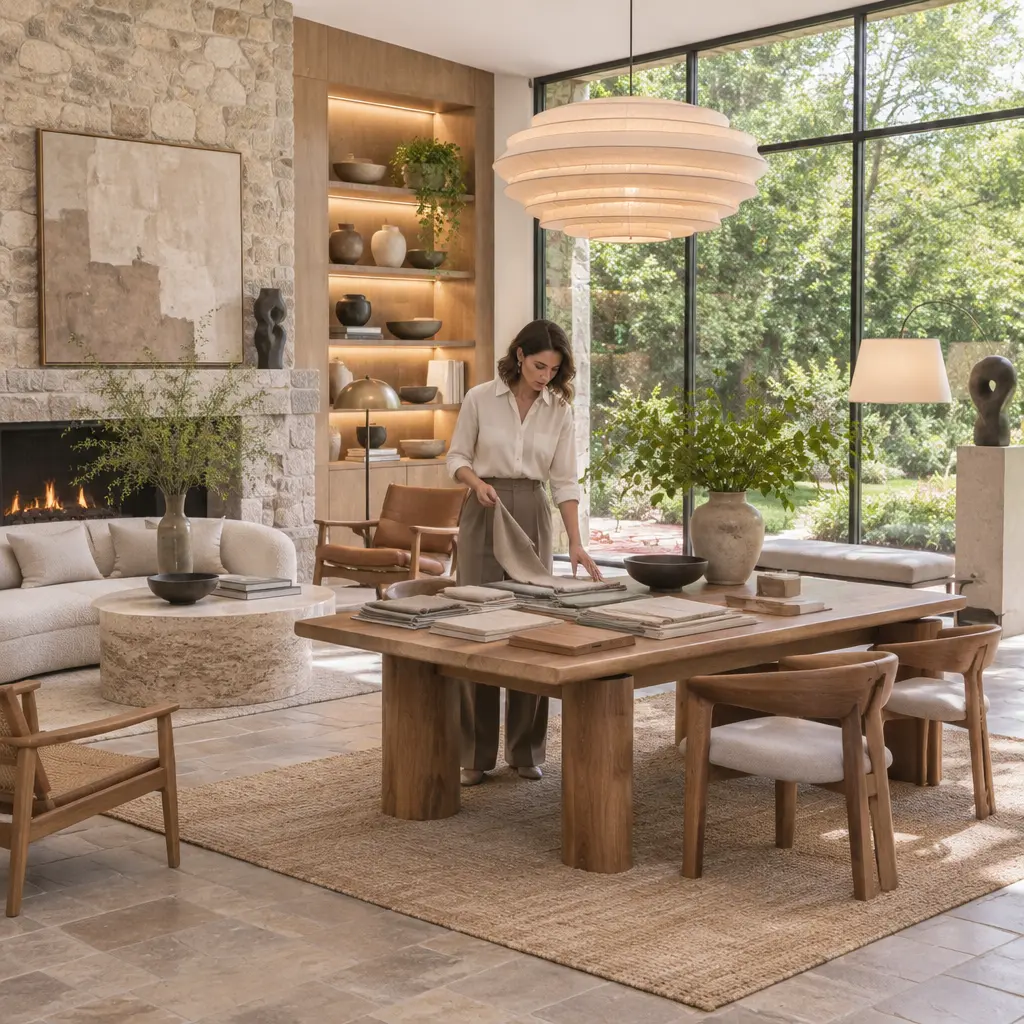
Luxury interior design in 2026 is moving toward rooms that feel personal, enduring, and comfortable—not simply expensive. Here, “luxury interior design trends” means emerging choices in materials, layouts, technology, and decoration that combine high quality with a distinctive experience. Recent industry research points to durable demand: the National Kitchen & Bath Association’s 2025 Kitchen Trends Report found that wellness, sustainability, and personalization are shaping residential design, while the American Society of Interior Designers’ 2025 Trends Outlook highlights wellness, resilience, and technology as influential forces. The trends to watch include natural materials, expressive color, sculptural forms, discreet smart-home systems, and wellness-centered spaces, all guided by craftsmanship and long-term value.
Luxury interior design trends prioritize lasting quality and personal meaning
Luxury interior design is an approach to shaping interior spaces through superior materials, skilled execution, thoughtful planning, and individualized detail. It is not defined by a single look or a high price tag. The American Society of Interior Designers (ASID) describes interior design as a practice that improves the function, safety, and well-being of people in interior environments; in luxury projects, those aims are expressed through exceptional detailing and a strong relationship between a space and its occupants.
This definition helps explain why current luxury trends are less about conspicuous consumption and more about longevity, comfort, and identity. The ASID 2025 Trends Outlook identifies wellness, sustainability, and technological change among major influences on design. Meanwhile, the National Kitchen & Bath Association (NKBA) reports growing interest in kitchens and bathrooms that support well-being, accessibility, and personal expression. Together, these findings suggest that a refined room should work beautifully as well as photograph well.
Craftsmanship and enduring materials
Craftsmanship means visible care in how a room’s elements are made, joined, finished, and installed. Rather than relying on a large quantity of ornament, designers are emphasizing tactile materials such as solid wood, natural stone, hand-finished metal, linen, and wool. Their appeal depends on thoughtful selection and detailing: a stone slab with expressive veining, cabinetry with carefully aligned grain, or upholstery chosen for both texture and durability.
The trend also reflects a practical focus on lifecycle. The U.S. Environmental Protection Agency’s guidance on sustainable materials encourages considering durability, maintenance, and environmental impacts when making purchasing decisions. For homeowners, this can mean choosing repairable furnishings, responsibly sourced timber, and finishes that can age gracefully instead of requiring frequent replacement.
Personalized, collected interiors
A collected interior brings together objects with personal, cultural, or historical meaning rather than treating every room as a coordinated showroom. Contemporary luxury spaces may pair contemporary seating with antiques, commissioned art, family pieces, or craft objects. The result feels individual because each item has a reason to be there.
This approach also offers a useful bridge from material quality to color and form. Once a room is built around meaningful objects and well-made essentials, expressive details can add character without overwhelming the architecture.
Natural palettes and expressive details shape luxury interiors
Color and decoration are becoming more personal, balancing quiet architectural backgrounds with deliberate moments of visual emphasis. Rather than following one universal palette, designers are combining earthy neutrals with saturated colors, layered textures, and artwork selected for its emotional or cultural resonance.
Earth-inspired color and layered neutrals
Earth-inspired color uses hues associated with natural landscapes—such as clay, olive, ochre, sand, and deep brown—to create warmth and visual continuity. Neutrals remain important, but they are increasingly layered through differences in tone and texture: a pale plaster wall, a nubby wool rug, and a timber surface can feel rich without relying on high contrast.
Color selection should account for daylight, artificial lighting, room orientation, and neighboring materials. A useful practical method is to test large samples in the actual space at different times of day. This avoids treating a paint-chip color as a fixed visual value when the room’s light can substantially change how it appears.
Sculptural furniture and statement lighting
Sculptural furniture and statement lighting function as both practical elements and visual focal points. Curved seating, substantial dining tables, textured pendants, and artful floor lamps can introduce movement and personality. The strongest examples preserve clear circulation and comfortable use rather than sacrificing function for a dramatic silhouette.
Lighting is particularly important because it influences how materials and colors are perceived. The Illuminating Engineering Society’s guidance emphasizes that lighting design should respond to the task, occupants, and visual environment. In a luxury home, layered lighting—ambient, task, and accent—can make a room adaptable for work, entertaining, and relaxation.
Art and craft as defining features
Art and craft bring distinct authorship into an interior. This may include a commissioned painting, handmade ceramics, woven textiles, or furniture by a local maker. Instead of filling every wall or surface, designers can create space around a smaller number of works so their scale, material, and story are easier to appreciate.
A real-world application is a living room organized around one significant artwork: the palette can echo a few colors in the piece, while restrained furnishings keep attention on it. This approach connects visual expression with the broader trend toward personal, lasting design.
Wellness and discreet technology make luxury homes more responsive
Wellness-oriented design and smart-home technology are increasingly treated as parts of the same system: both should make everyday life easier without turning the home into a technical display. The goal is to support comfort, sleep, accessibility, and control while preserving a calm, cohesive atmosphere.
Wellness-centered rooms and sensory comfort
Wellness-centered design considers how air, light, sound, temperature, ergonomics, and access to nature affect daily experience. Examples include daylight-oriented layouts, quiet rooms for rest, comfortable seating, low-glare lighting, and ventilation strategies suited to the home. The WELL Building Standard, developed by the International WELL Building Institute, organizes building-related health considerations into areas including air, light, comfort, and mind.
For residential projects, wellness does not require a dedicated spa room. A bedroom with effective blackout treatments, a bathroom with safe and comfortable access, or a reading nook with supportive lighting can make ordinary routines more restorative. The trend is most convincing when these features are integrated into the architecture rather than added as decorative signals.
Smart-home systems that recede into the background
Discreet smart-home design places controls for lighting, shading, climate, security, and entertainment within a coordinated system. The technology is most successful when it is intuitive, reliable, and compatible with how residents actually use the space. Hidden speakers, simplified control panels, and automated shades can preserve clean sightlines while improving convenience.
Planning matters: homeowners should consider privacy, cybersecurity, interoperability, maintenance, and manual controls before installation. A system that requires constant troubleshooting can undermine the comfort it is meant to provide. ASID’s trends research identifies technology as an important design influence, but the practical measure of success is whether it supports people without demanding their attention.
Flexible spaces and inclusive comfort
Flexible design allows rooms to adapt as household needs change. A guest room might also serve as a study; a dining area may support both everyday meals and larger gatherings. Movable furniture, well-planned storage, and adaptable lighting help a space serve multiple purposes without feeling temporary.
Inclusive comfort means designing for a wider range of ages and abilities, through features such as clear circulation, comfortable seating heights, lever handles, and accessible storage. NKBA’s kitchen and bath trend reporting has highlighted aging in place and accessibility as continuing considerations. When these elements are integrated early, they can look refined while making the home easier to use.
How to apply luxury interior design trends with lasting value
Trends work best as design tools, not as instructions to replace everything at once. A balanced project begins with the home’s architecture and residents’ needs, then adds contemporary elements where they improve comfort or meaning. A simple decision framework can help keep a renovation coherent:
- Invest first in durable, frequently used elements such as flooring, seating, cabinetry, and lighting infrastructure.
- Use paint, textiles, art, and smaller accessories to experiment with color and trend-led details.
- Choose materials based on performance, maintenance, sourcing, and how they will age.
- Plan lighting, storage, accessibility, and technology alongside the layout rather than as afterthoughts.
- Prioritize a few meaningful pieces over excess decoration, and leave room for the home to evolve.
For example, a renovation might preserve original architectural details, add custom storage and layered lighting, and introduce a contemporary color through replaceable textiles. That strategy connects craftsmanship, personalization, wellness, and flexibility while reducing dependence on short-lived decorative trends.
Conclusion: luxury design is becoming more personal, durable, and livable
The luxury interior design trends to watch combine enduring materials and skilled craft with collected interiors, natural color, sculptural accents, wellness-focused planning, and discreet technology. Industry guidance from ASID, NKBA, and the WELL Building Standard reinforces a wider shift toward spaces that support health, adaptability, and individual needs—not just visual display.
For homeowners and design professionals, the most useful next step is to assess how a space is used before selecting finishes or furnishings. Invest in quality where it matters daily, test materials in context, and adopt trends selectively. Further reading from ASID, NKBA, and the International WELL Building Institute can help translate these broad directions into informed project decisions.
Sources: American Society of Interior Designers, 2025 Trends Outlook, https://www.asid.org/resources/research/2025-trends-outlook; National Kitchen & Bath Association, 2025 Kitchen Trends Report, https://nkba.org/research/2025-kitchen-trends-report/; U.S. Environmental Protection Agency, Sustainable Materials Management Basics, https://www.epa.gov/smm/sustainable-materials-management-basics; Illuminating Engineering Society, Lighting Library, https://www.ies.org/lighting-library/; International WELL Building Institute, WELL Building Standard, https://www.wellcertified.com/; National Kitchen & Bath Association, 2025 Bath Trends Report, https://nkba.org/research/2025-bath-trends-report/