
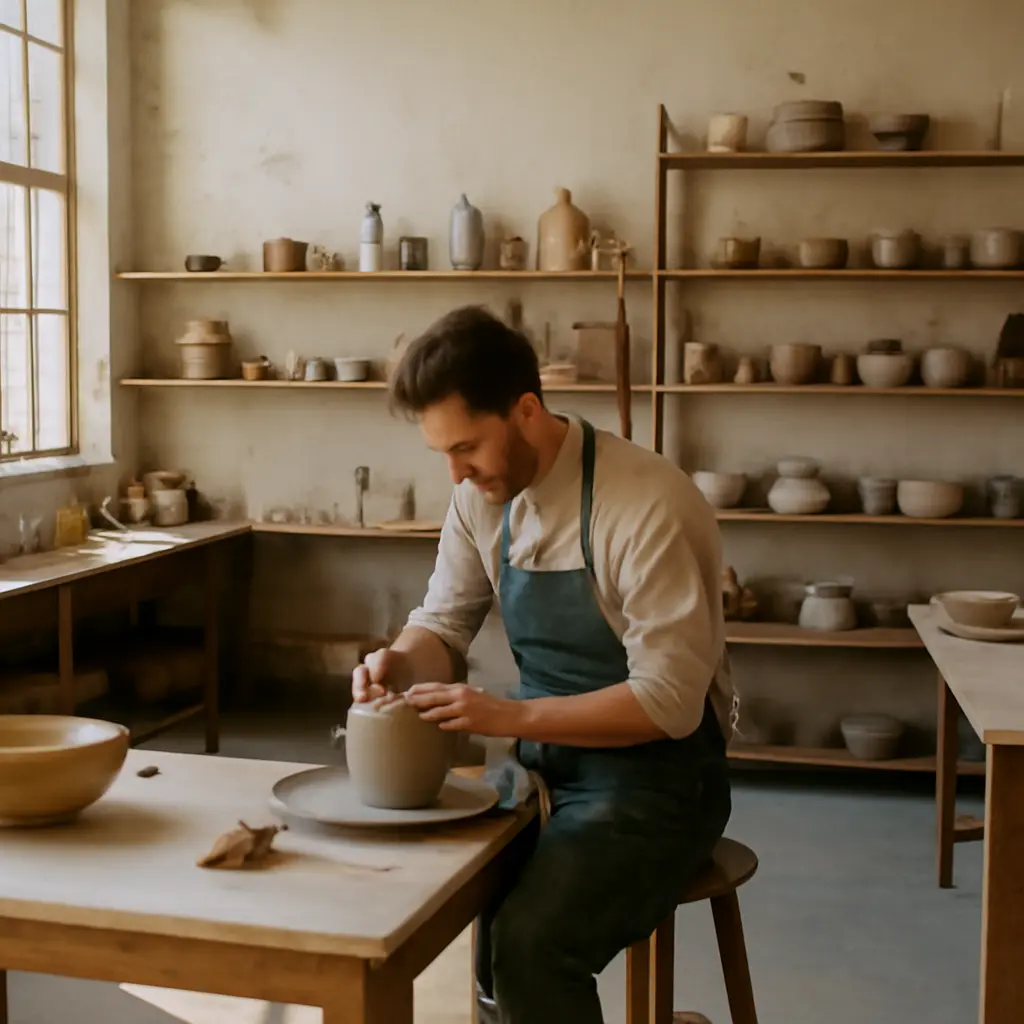
Luxury home accents are the decorative objects—such as lighting, ceramics, textiles, and furniture—that shape a room’s character as well as its use. In the ateliers behind coveted pieces, designers and craftspeople combine material knowledge, hand skills, and contemporary production to make objects distinctive and durable. The work matters in a global home-furnishings market worth hundreds of billions of dollars: Grand View Research estimated the global home decor market at US$663.1 billion in 2023. This overview explains how ateliers develop designs, select materials, preserve craft, and respond to sustainability and changing consumer tastes.
How Atelier Craft Shapes Coveted Home Accents
An atelier is a designer’s or maker’s workshop, particularly one where skilled practitioners develop and produce work through close collaboration. In luxury home accents, the term can describe a small independent studio, a specialist workshop serving a design house, or a larger brand’s in-house craft operation. The defining feature is not simply that an object is handmade: it is the integration of design decisions with specialized making, from prototypes and material tests to finishing and quality review.
The word “coveted” is best understood as a description of consumer appeal, not a formal quality grade. Distinctive design, visible workmanship, limited availability, provenance, and a compelling story can all contribute to an object’s desirability. These qualities are especially relevant in a broad home-decor market where mass production offers abundant choice and makers compete through material character and considered detail.
Design development and prototyping
Atelier design turns an idea into an object that can be made, used, and maintained. A designer may begin with a drawing, a reference to architecture or nature, or an experiment with a material. The workshop then develops prototypes to test scale, stability, color, assembly, and how the piece behaves in a real interior. For a lamp, that can mean checking the balance of the base, the spread of light, heat management, and access to replaceable components; for a ceramic vessel, it can mean testing glaze, wall thickness, and firing behavior.
Prototyping connects creative intent with practical constraints. It can reveal that a visually striking form is difficult to transport or that a material changes unpredictably during production. Recording revisions and specifications helps a studio reproduce a design consistently without eliminating the small variations that make hand-finished work distinctive.
Craft specialisms and object types
Home-accent ateliers often concentrate on a particular material or process. Hyponyms—the more specific categories within the wider idea of atelier-made accents—include ceramic studios, glassworks, lighting workshops, textile ateliers, metalworking shops, and furniture studios. Each specialization has its own technical vocabulary and production risks.
- Ceramic ateliers shape clay by hand, on a wheel, or in molds, then dry and fire it. Glaze recipes and kiln conditions influence surface and color.
- Glass studios use processes such as blowing, casting, and cutting. Temperature control and timing affect clarity, form, and strength.
- Textile workshops weave, print, embroider, or finish fibers into cushions, throws, and wall coverings. Fiber choice influences texture, care, and longevity.
- Metal and lighting workshops form, join, and finish components, while lighting designs also need appropriate electrical engineering and safety compliance.
- Furniture ateliers combine structural construction with upholstery, carving, marquetry, or other decorative techniques.
These categories overlap in finished interiors. A single pendant light, for example, might bring together a glass shade, a turned wooden component, a metal fitting, and textile-wrapped wiring. That collaboration makes material sourcing and coordination as important as the individual craft skills.
How Atelier Materials and Making Create Distinction
Materials are not merely ingredients; they influence an accent’s appearance, weight, durability, repairability, and environmental footprint. The Ellen MacArthur Foundation describes a circular economy as one designed to eliminate waste and pollution, circulate products and materials, and regenerate nature. That framework is useful for ateliers because early material choices can determine whether an object can be repaired, reused, or recycled later.
Material selection and provenance
Material selection balances aesthetics with performance and evidence of origin. A workshop may assess wood species, stone characteristics, fiber composition, recycled content, finishes, and the reliability of suppliers. Provenance—the documented origin and production history of a material or object—can help buyers understand what they are purchasing, but claims should be specific and verifiable rather than relying on vague labels such as “natural” or “eco-friendly.”
The Forest Stewardship Council’s certification system, for example, provides a framework for identifying forest products from responsibly managed sources through chain-of-custody controls. Such certification is one useful signal, not a complete assessment of a product’s overall impact. A credible materials account should also consider processing, transport, coatings, expected lifespan, and the option to repair or separate components.
Handwork, finishing, and quality control
Handwork includes skilled operations such as carving, turning, weaving, glazing, polishing, and fitting. The presence of handwork does not automatically guarantee quality; quality depends on whether the process is appropriate to the design and whether the workshop checks the result. Strong ateliers establish tolerances, inspect critical joins and surfaces, and test how an object functions—not just how it looks in a photograph.
Variation is a related concept. Small differences in a handmade glaze or woven surface may be intentional evidence of process, while a structural crack or unstable base is a defect. Clear product descriptions and care guidance help customers distinguish expected variation from damage and support longer use.
Small-batch production and collaboration
Small-batch production means making a limited run rather than producing continuously at mass scale. It can enable a studio to test an idea, work with specialist suppliers, and maintain close oversight. It may also mean longer lead times, higher unit costs, and limited replacement parts, so responsible makers should communicate availability and repair options clearly.
Collaboration is common in complex pieces. Designers may work with ceramicists, glassblowers, engineers, upholsterers, and finishing specialists, each contributing knowledge that a single workshop may not possess. A useful case study is the making of a bespoke chandelier: the designer establishes the overall composition, a glass studio produces the shades, a metalworker fabricates the frame, and an electrical specialist ensures that the assembled product meets applicable requirements. The final quality depends on coordination across the entire chain.
How Sustainability and Provenance Influence Atelier Accents
Sustainability in home accents is a set of measurable choices rather than a style. Relevant considerations include material extraction, manufacturing energy, chemical use, transport, product life, and end-of-life options. The United Nations Environment Programme has identified buildings and construction as a major source of global energy-related emissions, underlining why decisions about the built environment and its contents matter. That sector-wide context should not be mistaken for a specific footprint figure for any one vase, chair, or lamp.
Durability, repair, and circular design
Circular design aims to keep products and materials in use for longer. For an accent object, practical measures can include replaceable electrical parts, removable upholstery, repairable joints, durable finishes, and spare components. Makers can also explain how to clean or maintain a piece and whether a damaged item can be returned for repair.
The European Commission’s Ecodesign for Sustainable Products Regulation entered into force in July 2024 and establishes a framework for setting product sustainability requirements in the European Union. It is not a blanket rule that every decorative object already has to meet the same specific standards; requirements are developed by product group. Still, the policy direction reinforces the importance of durability, resource efficiency, and better product information.
Authenticity, documentation, and buying with care
Authenticity is supported by transparent documentation: the maker’s identity, place of production, material details, edition or batch information, and a realistic account of how the piece was made. For buyers, useful questions include whether the item is made to order or held in stock, what variations to expect, how it should be cared for, and which parts can be repaired or replaced.
A considered purchase also accounts for function and context. Measure the intended space, check the object’s weight and maintenance needs, and confirm that lighting or electrical products are suitable for their intended use. These steps help distinguish long-term value from novelty and reduce the chance that a beautiful object becomes difficult to live with.
Conclusion: The Future of Coveted Home Accents
Ateliers create sought-after home accents by joining design development, specialist craft, carefully chosen materials, and attentive finishing. Their most distinctive work can express a place or maker’s identity, while strong documentation and quality control make that character understandable to buyers. Sustainability adds another test: whether an object can serve well, be maintained, and remain useful over time.
As the home-decor market continues to evolve, the most meaningful question is not simply whether an accent is handmade or exclusive. Ask who made it, what it is made from, how it performs, and how it can be cared for or repaired. Explore makers’ process notes and provenance details before buying, and choose pieces suited to the life and space they are meant to enrich.
Sources: Grand View Research, Home Decor Market Size, Share & Trends Analysis Report, https://www.grandviewresearch.com/industry-analysis/home-decor-market; Ellen MacArthur Foundation, What Is a Circular Economy?, https://www.ellenmacarthurfoundation.org/topics/circular-economy-introduction/overview; Forest Stewardship Council, Chain of Custody Certification, https://fsc.org/en/chain-of-custody-certification; United Nations Environment Programme, Global Status Report for Buildings and Construction, https://www.unep.org/resources/report/global-status-report-buildings-and-construction; European Commission, Ecodesign for Sustainable Products Regulation, https://environment.ec.europa.eu/topics/circular-economy/ecodesign-sustainable-products-regulation_en.