
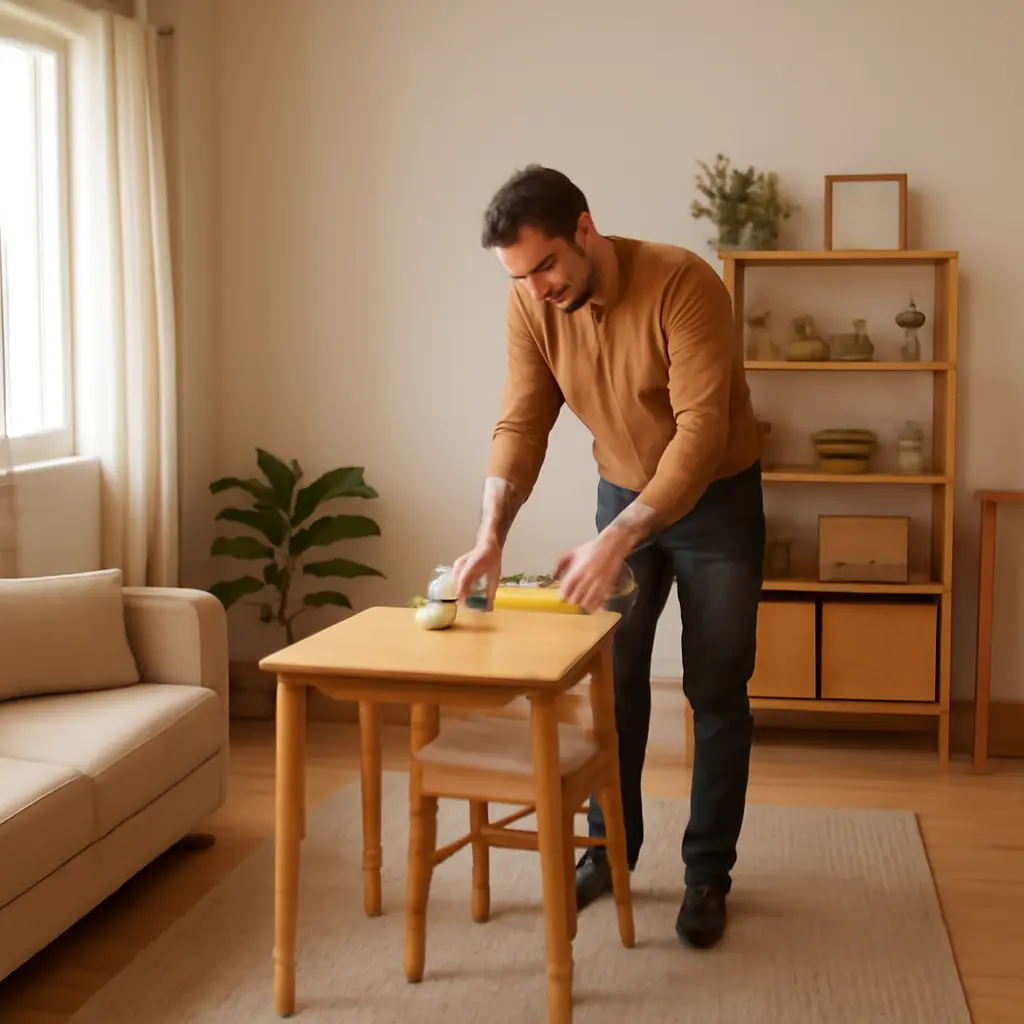
Elegance can thrive in a small home: it depends less on square footage than on proportion, light, materials, storage, and how comfortably a space supports daily life. But size still matters when a household needs privacy, accessibility, or room for several activities at once. Research on housing and well-being, alongside practical design guidance, points to a balanced answer: thoughtful design can make limited space feel polished and functional, but it cannot erase every constraint of crowding.
Elegant small-space design balances appearance and function
Elegance in interior design is a quality of considered harmony: visual order, useful proportions, coherent materials, and details that feel intentional rather than excessive. It is not a standardized scientific measure, so claims that a particular home is “elegant” are partly subjective. In practice, however, designers often assess the conditions that support an elegant impression—clear circulation, suitable lighting, visual continuity, and well-resolved storage.
The U.S. Environmental Protection Agency reports that Americans spend about 90% of their time indoors, making the comfort and usability of homes consequential, not merely decorative. The U.S. Census Bureau’s American Community Survey also tracks household size and housing characteristics, underscoring that rooms must serve different numbers of people and needs. These measures do not prove that smaller homes are more or less elegant; they show why design must address both experience and practical demands.
A useful way to evaluate a compact interior is to consider three related outcomes: perceived spaciousness, everyday functionality, and visual coherence. A room may look generous in a photograph yet fail at storage or circulation. Conversely, a small room can feel composed and welcoming when its layout, lighting, and furnishings are scaled to the space.
Perceived spaciousness is different from actual floor area
Perceived spaciousness is the subjective sense that a room feels open and easy to use. Clear sightlines, daylight, uncluttered surfaces, and furniture that leaves circulation paths free can strengthen that impression. These strategies change how space is experienced; they do not increase the home’s actual area or create additional privacy.
Function is part of elegance
A functional interior supports routine activities without requiring constant rearrangement. A dining table that doubles as a work surface can be an efficient choice, for example, if lighting, seating, and storage also support both uses. Multipurpose rooms are most successful when each activity has a defined place and the transition between them is straightforward.
Small-space elegance relies on proportion, light, and order
Interior designers commonly use proportion to describe how a room’s dimensions relate to its furnishings and architectural features. In a small home, oversized pieces can restrict movement, while too many undersized objects may create visual noise. The goal is not to make every item tiny; it is to select pieces whose dimensions and placement suit the room and its use.
This design approach connects naturally to three practical categories: furniture scale, lighting, and storage. Together, they determine whether a compact room feels deliberate or crowded.
Furniture scale and circulation
Furniture scale is the relationship between an object’s size and the room around it. Before buying a sofa, bed, or table, measure both the intended footprint and the routes people need to move through the room. A floor plan or full-size paper template can reveal conflicts that are difficult to spot in a showroom.
Legged furniture can leave more visible floor beneath a piece, while nesting tables and extendable dining surfaces can adapt to changing needs. These are design options, not universal rules: a person with mobility needs may prioritize stable, accessible furniture over a visually lighter silhouette.
Lighting and visual continuity
Layered lighting combines general illumination with task and accent light. A ceiling fixture can provide overall brightness, while a reading lamp or under-cabinet light serves a specific activity. The U.S. Department of Energy recommends choosing lighting suited to the task and notes that LED products use at least 75% less energy and last up to 25 times longer than incandescent lighting. Efficient lighting can therefore support both atmosphere and household energy savings.
Consistent colors and materials can help adjoining areas read as a coherent whole, especially in open-plan homes. This does not mean every surface should match. A restrained palette with a few purposeful contrasts can give a compact interior distinction without visually fragmenting it.
Storage and visual calm
Storage is the organized provision of places for items used regularly or kept for later. Closed cabinets can reduce visible clutter, while open shelving works best when its contents are edited and arranged with care. Storage should also be convenient: if everyday objects are difficult to reach, a polished room may become frustrating to maintain.
A practical audit starts by identifying what needs to remain accessible, what can be stored seasonally, and what no longer serves the household. This is often more effective than purchasing organizers before understanding what must be stored.
More square footage still matters for comfort and choice
Design can improve how a home works, but it cannot make every small home suitable for every household. The National Institute of Standards and Technology explains that indoor environmental quality involves conditions such as air quality, thermal comfort, lighting, and acoustics. In a crowded or poorly ventilated home, decorative choices alone cannot resolve problems related to fresh air, noise, or lack of personal space.
This distinction separates a compact home that is efficiently planned from one that is overcrowded. Household size, room count, storage, accessibility, and the ability to separate work, rest, and social activities all affect whether the floor area is adequate. The U.S. Census Bureau’s housing data provide a way to examine these conditions across communities, while the experience of residents depends on circumstances that a single square-footage figure cannot capture.
Privacy, accessibility, and changing needs
A household may need separate spaces for sleep, remote work, caregiving, or quiet. Sliding partitions and flexible furniture can offer partial separation, but they do not provide the same acoustic privacy as a dedicated room. Similarly, a layout that looks efficient may be difficult to navigate for someone using a wheelchair or walker unless clearances, thresholds, and storage heights are considered from the outset.
Universal design—the practice of making environments usable by people with a wide range of abilities—therefore belongs in discussions of elegance. A well-designed home should not force residents to choose between beauty and safe, comfortable use.
A real-world example: the adaptable studio
A studio apartment can feel intentional when its sleeping, cooking, and living functions are clearly organized. A compact dining table near the kitchen, a well-positioned bed, a rug that defines the sitting area, and storage that reaches upward can create readable zones without adding walls. Yet the same plan may not suit a household that needs sound separation, substantial work equipment, or room for children to play. The example illustrates the central trade-off: smart planning expands flexibility, while additional area expands choice.
A practical test for elegance without extra space
Before redesigning or furnishing a small home, assess how it performs as well as how it looks. The following checks help identify changes with real daily value:
- Map the routes between entrances, seating, beds, and work areas; remove avoidable obstacles.
- Measure large furniture and confirm doors, drawers, and cabinets can open fully.
- Identify the activities that overlap and decide whether they need visual, acoustic, or physical separation.
- Improve task lighting and use daylight effectively without blocking windows.
- Choose storage based on actual belongings and how often each item is used.
- Review accessibility, ventilation, noise, and privacy before treating a decorative refresh as a complete solution.
These steps can guide renters and homeowners alike. Low-cost changes—rearranging furniture, removing unused items, improving lamp placement, or adding a mirror where it does not create glare—may help. Structural work, built-ins, or major purchases require careful measurement and, where appropriate, professional advice.
Conclusion: elegance is possible, but space has limits
Elegant small-space design depends on proportion, circulation, lighting, storage, and visual coherence. These qualities can make a compact home feel more ordered and pleasant, and efficient LED lighting offers a measurable energy benefit. But perceived spaciousness is not the same as additional floor area: privacy, accessibility, household size, and room for simultaneous activities remain important.
The most useful question is not whether elegance requires square footage in every case, but whether a home’s space supports the people who live there. Start by measuring, mapping daily routines, and addressing practical needs before choosing finishes. For further reading, consult housing data from the U.S. Census Bureau, indoor-environment guidance from the National Institute of Standards and Technology, and lighting recommendations from the U.S. Department of Energy.
Sources: U.S. Environmental Protection Agency, “Why Indoor Air Quality is Important to Schools,” https://www.epa.gov/iaq-schools/why-indoor-air-quality-important-schools; U.S. Census Bureau, American Community Survey, https://www.census.gov/programs-surveys/acs; U.S. Department of Energy, “LED Lighting,” https://www.energy.gov/energysaver/led-lighting; National Institute of Standards and Technology, “Indoor Environmental Quality,” https://www.nist.gov/programs-projects/indoor-environmental-quality-ieq